OnBinder

Homeowners who occupy their homes can insure the building, while tenants can insure their household contents. Small business owners can insure commercial property and factory property. Enroll through a participating insurer before an incident occurs, take photos immediately after flooding, and file a claim at once. In principle, the limitation period for insurance claims is 2 years.
The explanation of the program in this article is based on guidance from the Ministry of the Interior and Safety and related inquiries verified on April 28, 2026.
How to Enroll Before Flooding
Enrollment must be completed before a disaster occurs. The Ministry of the Interior and Safety oversees the program, and participating insurers underwrite the policies. The coverage period is generally 1 year, and you should check the policy’s start and end dates.
“A government-sponsored insurance program overseen by the Ministry of the Interior and Safety and operated by private insurers” — Ministry of the Interior and Safety Guide to Storm, Flood, and Earthquake Insurance
- Determine your eligibility category. Check whether you qualify as a homeowner, tenant, or small business owner.
- Choose the insured property. Buildings and household contents, facilities and fixtures, machinery, and inventory are classified separately.
- Check the current participating insurers. You can find them in the Storm, Flood, and Earthquake Insurance section of the Ministry of the Interior and Safety website. (Verified value: 7 participating insurers: DB손해보험, 현대해상, 삼성화재, KB손해보험, NH농협손해보험, 한화손해보험, 메리츠화재. · Source: mois.go.kr · Verified on 2026-09-15)
- Compare premiums and coverage amounts. They vary depending on the address, building structure, insured property, and insured amount.
- Check the policy’s coverage start date. Even if you have paid the premium, an incident occurring before the actual start date may not be covered.
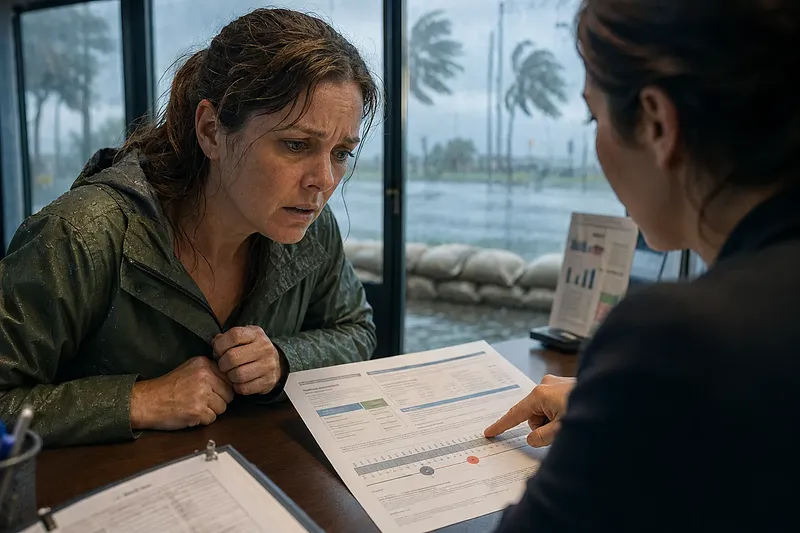
Enrollment may be restricted after a weather advisory or warning is issued or when a disaster is imminent. You must check with the insurer regarding the restriction criteria and applicable areas. You cannot enroll after damage has already occurred and then file a claim for it.

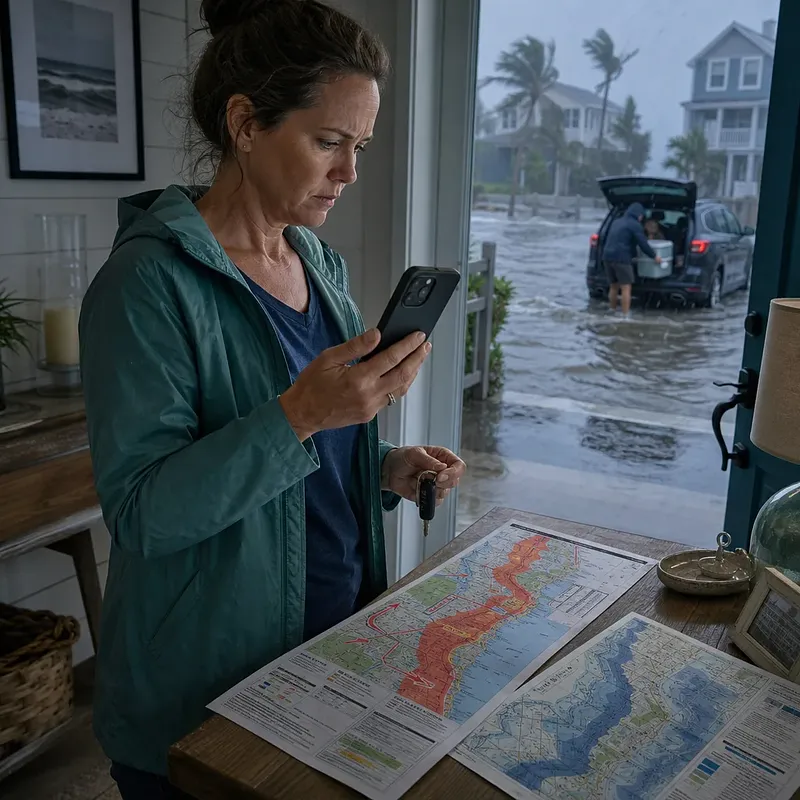
A tenant documents flood damage inside the home for an insurance claim.AI-generated image
Eligibility for Homeowners, Tenants, and Small Business Owners
Eligibility varies depending on the building’s use and the policyholder’s rights. Owners and tenants at the same address may separately insure their respective property. Check the lease agreement and the building’s designated use first.
| Enrollment type | Main property that can be insured | What to check |
|---|---|---|
| Homeowner | Detached or multi-unit residential buildings used directly as residences | Building use and ownership |
| Residential tenant | Movable property such as household contents inside the rented home | Lease agreement and actual occupancy |
| Small business retail premises | Commercial building, facilities and fixtures, inventory, etc. | Small business eligibility and business-premises use |
| Small business factory | Factory building, facilities, machinery, inventory, etc. | Business registration and property details |
| Greenhouse operator | Agricultural greenhouses meeting officially announced specifications | Compliance with specifications and facility details |
Not every building is automatically accepted for coverage. Additional verification is required if the actual use or structure differs from the official records. Detailed eligibility is subject to review by a participating insurer.
Summary by Circumstance
Both ownership and the damaged property must be considered when determining the scope of coverage. As shown in the cases below, even the same flooding event may involve claims under different policies. The first priority is to check the insured property listed in the policy.
- If the walls and floor of an owner-occupied home are flooded: Check whether the building policy provides coverage.
- If furniture in a jeonse or monthly rental home gets wet: Check the tenant’s movable-property policy.
- If fixtures and inventory in leased commercial premises are flooded: Check whether each type of small business property was insured.
- If factory machinery is submerged: Check whether the machinery is included in the insurance policy.
- If property belonging to both the building owner and tenant is damaged: Report the damage separately under each party’s policy.
If a tenant insured only movable property, building repair costs are not covered by that policy. Conversely, if there is only a building policy, the tenant’s household contents may be excluded. Do not assume that one policy covers all losses at a single address.
Covered Natural Disasters and Scope of Flooding
The insurance covers losses directly caused by natural disasters specified in the policy terms. Covered disasters are typhoons, floods, heavy rain, strong winds, wind waves, tsunamis, heavy snow, and earthquakes. Actual payment is determined based on both the cause of the incident and the policy details.
Ordinary leaks and damage from aging pipes must be distinguished from flooding. Damage caused solely by building defects or poor maintenance may also be handled differently. The causal relationship between the natural disaster and the loss is crucial.
How to File a Flood Insurance Claim
Immediately after flooding, you must secure safety and preserve evidence at the same time. Under the Commercial Act, insurance claims are, in principle, subject to a limitation period of 2 years. However, if reporting is delayed, it becomes more difficult to verify the cause and amount of the loss.
- Avoid electrical and gas hazards. Do not enter a flooded area until it has been confirmed safe.
- Photograph the entire scene. Record the building exterior, floodwater height, and the condition of each room in sequence.
- Photograph each damaged item. Create records that show the product name and quantity.
- Report the incident to your insurer immediately. Provide the policyholder’s information, the date and time of the incident, the address, and the cause of the damage.
- Prevent further damage. Keep receipts for emergency drainage or temporary mitigation costs.
- Cooperate with the loss investigation. If items must be discarded before the investigation, obtain confirmation from the insurer.
- Submit the claim documents. Prepare the insurance claim form and proof of identity, contract, and damage.
- Review the assessment. Check the insured amount, deductible, and exclusions under the policy terms.
Required documents vary by insurer and insured property. Generally, identification, a copy of your bankbook, and photos of the damage may be required. Businesses may also be asked to provide business registration and inventory or machinery records.