OnBinder
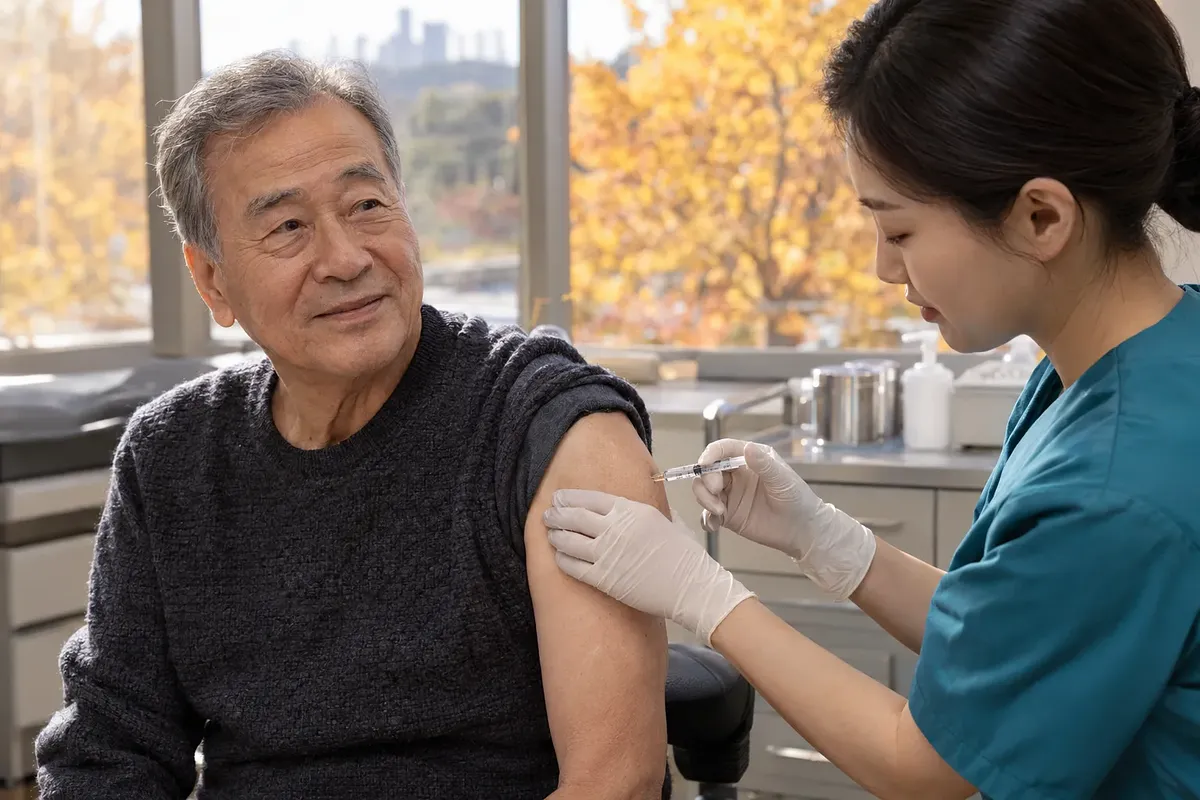
COVID-19 vaccination under the national vaccination program became a mandatory immunization starting with the 2026-2027 season. Eligible groups include people aged at least 65 and other high-risk groups, such as immunocompromised people. The general schedule begins on October 12, 2026, with start dates varying by group. The end date is June 30, 2027.
The ages, number of doses, and schedules in this article are based on materials dated October 2, 2026, from the Korea Disease Control and Prevention Agency and the program guidance for that season.
What changed with the move to mandatory immunization?
The main change is that vaccination for high-risk groups will be offered on an ongoing basis. The Korea Disease Control and Prevention Agency announced the transition plan on September 17, 2026. The program aims to prevent severe illness and death among high-risk groups.
Transition to mandatory immunization for the stable operation of COVID-19 vaccination
This wording comes from the Korea Disease Control and Prevention Agency's “Announcement of the ’26-’27 Season COVID-19 National Vaccination Implementation Plan.”
Mandatory immunizations are vaccinations that local governments must provide. National vaccinations are those for which the government covers the cost. The name alone therefore does not determine whether everyone must be vaccinated or who is eligible for free vaccination. The definitions and funding structure follow the 2026 national vaccination guidelines.
| Category | Meaning | What applies this season |
|---|---|---|
| Temporary immunization | Provided when deemed necessary to prevent infectious diseases | The previous approach to COVID-19 vaccination |
| Mandatory immunization | Vaccination provided by local governments under the law | Transition to an ongoing system to protect high-risk groups |
| National vaccination support | Coverage of vaccination costs for specified groups and vaccines | Eligibility criteria remain focused on high-risk groups |

Long-term-care hospitals and facilities should check their separate vaccination schedules under the October 2, 2026 guidance.
COVID-19 vaccination eligibility and schedule
General start dates vary by age and high-risk status. Older adults are grouped by the birth dates below. For immunocompromised people and other eligible groups, the age threshold of 12 is determined by their date of birth at the time of vaccination.
| Eligible group | How age is determined | General start date | End date |
|---|---|---|---|
| People aged at least 70 | Born by December 31, 1956 | October 12, 2026 | June 30, 2027 |
| People aged 65-69 | Born from January 1, 1957, through December 31, 1961 | October 15, 2026 | June 30, 2027 |
| Immunocompromised people aged at least 12 | Date of birth at the time of vaccination | October 12, 2026 | June 30, 2027 |
| Patients and residents aged at least 12 in facilities vulnerable to infection | Date of birth at the time of vaccination | October 12, 2026 | June 30, 2027 |
A separate schedule applies to long-term care hospitals and facilities. This distinction is specified in the October 2 press reference materials. Confirm the actual vaccination date for these facilities with the facility or the public health center responsible for it.
The start date for high-risk children under 12 cannot be determined from the table above. The September implementation plan said it would be announced separately after the vaccines became available. Check the Immunization Assistance website or a public health center for subsequent schedule information.
Supporting documents for immunocompromised people and facility patients and residents
As a rule, people being vaccinated on the basis of high-risk status must present supporting documents. Exceptions apply when medical staff make the determination or when vaccination takes place at a facility. An exception to the document requirement does not waive the eligibility criteria.
| Reason for vaccination | Documents generally required | When documents are not required |
|---|---|---|
| Immunocompromised status | A medical certificate or written medical opinion from a healthcare institution, or similar documents | When medical staff determine that the person is immunocompromised |
| Admission to or residence in a facility vulnerable to infection | Confirmation of residence at the facility, or similar documents | Vaccination at the facility by its contracted physician or other visiting provider, or vaccination provided by the facility itself |
Being immunocompromised is different from simply feeling tired or physically weak. Cancer treatment and treatment with immunosuppressants are among the criteria considered. Medical staff determine whether a person's treatment status meets the criteria. The detailed criteria and exceptions to document requirements are available in the Immunization Assistance program guidance.
Comparison with the influenza schedule
The two vaccines can be given on the same day, but some general start dates differ. In particular, the start dates differ for people aged at least 75. Using only the influenza schedule to plan a COVID-19 vaccination could cause confusion.
| Age group in 2026 | General influenza start date | General COVID-19 start date |
|---|---|---|
| People aged at least 75 | October 6, 2026 | October 12, 2026 |
| People aged 70-74 | October 12, 2026 | October 12, 2026 |
| People aged 65-69 | October 15, 2026 | October 15, 2026 |
The October 2 guidance includes an exception for early same-day vaccination. The provider must have both vaccines available. The person must be visiting according to the influenza schedule. If the doctor conducting the pre-vaccination assessment approves, they may also receive a COVID-19 vaccine starting October 6.
This exception does not change the general start dates for everyone. The general schedule and the conditions for the exception are both specified in the October 2 press reference materials.