2026–2027 Free Flu Vaccination Eligibility and Start Dates by Birth Year
Starting with the 2026–2027 season, the national influenza vaccination program for children will expand to include those through age 14. Exact birth date and age-in-months criteria should be checked on the Korea Disease Control and Prevention Agency’s Immunization Assistance website. Free vaccination start dates vary according to the child’s required number of doses and birth date, pregnancy status, and age group for adults aged 65 and older.
Eligibility for free vaccination has been expanded to include children through age 14. Exact birth date and age-in-months criteria should be checked on the Korea Disease Control and Prevention Agency’s Immunization Assistance website.
Children requiring two doses and pregnant women can be vaccinated starting September 21, 2026, while children requiring one dose can be vaccinated starting September 28.
Start dates vary by age group for adults aged 65 and older, so the official schedule should be checked on the Korea Disease Control and Prevention Agency’s Immunization Assistance website.
Eligible individuals can receive free vaccinations at participating designated medical institutions or public health centers that provide vaccinations, regardless of their registered address.
Participation by designated medical institutions and vaccine inventories may vary, so vaccination availability should be confirmed before visiting.
The 2026-2027 seasonal national influenza vaccination program will be implemented sequentially by eligible group starting on September 21, 2026. This season, the age limit for free childhood vaccination will be expanded from 13 to 14, and the exact date-of-birth criteria for those newly included should be checked through the Korea Disease Control and Prevention Agency’s Immunization Assistance website.
The official disease name for what is commonly called the “flu” is influenza. The national vaccination program does not provide universal free vaccination for all ages; it applies only to those who meet the government-designated criteria for children, pregnant women, and people aged 65 or older.
Changes for the 2026-2027 Season
The biggest change is that eligibility for children has been expanded to those aged at least 6 months through age 14. The eligible date-of-birth range should be checked in the official guidance on the Korea Disease Control and Prevention Agency’s Immunization Assistance website.
The exact date-of-birth range for those newly included should be checked in the official guidance on the Korea Disease Control and Prevention Agency’s Immunization Assistance website. Eligibility is determined by the date-of-birth range established for the national program, not by school grade or the age a person is commonly described as on the vaccination date.
Category | 2026-2027 season criteria
Eligible age for children | At least 6 months old and at most 14 years old
Overall date-of-birth range | January 1, 2012-August 31, 2026
Birth dates newly included under this expansion | Born January 1-December 31, 2012
Pregnant women | Anyone whose pregnancy can be confirmed, regardless of gestational age
Older adults | Born on or before December 31, 1961
Even if an infant falls within the eligible date-of-birth range, the influenza vaccine is not administered before the infant reaches 6 months of age. For infants who reach 6 months of age during the program period, the actual date on which vaccination becomes available should be confirmed with a medical institution.
Vaccination Schedule for Children and Pregnant Women
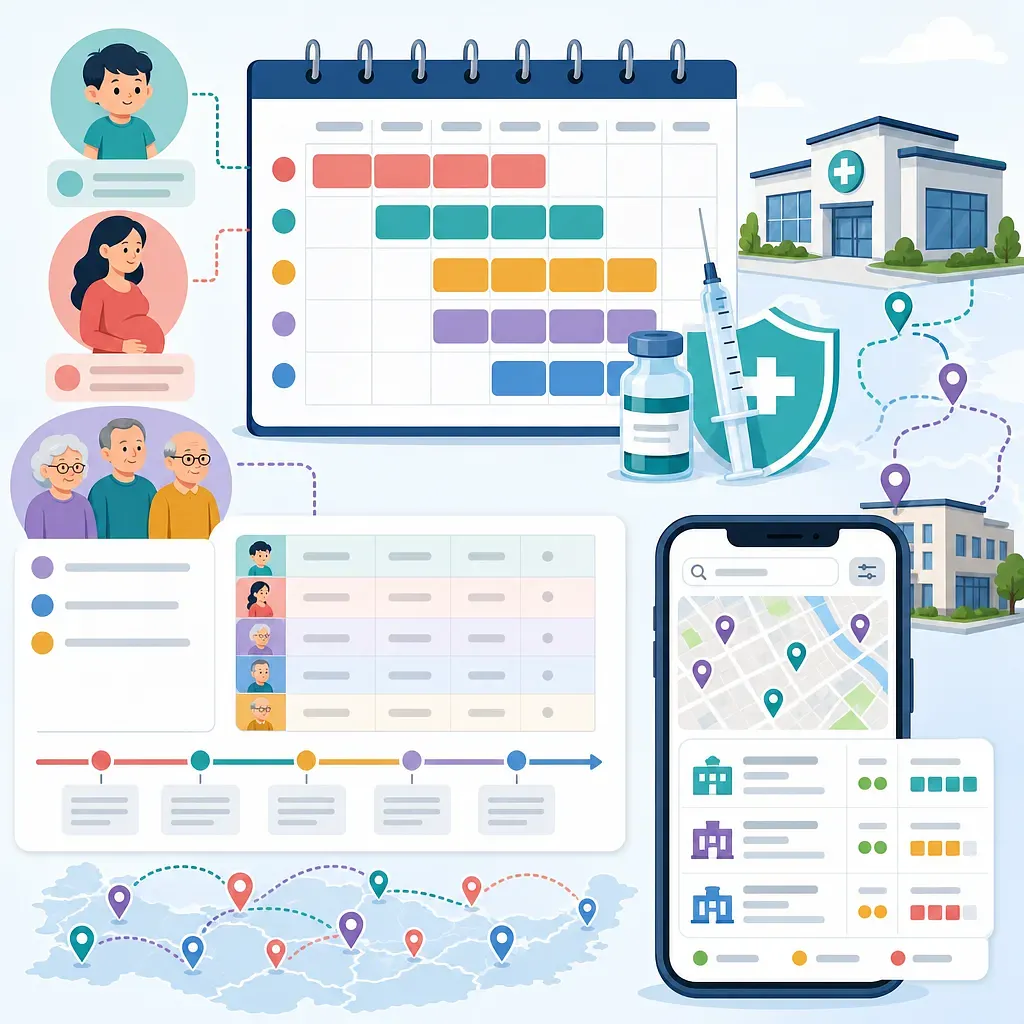
The start date for children is determined not by age alone but by the number of doses required this season.
Eligible group | Vaccination start date | End date
Children requiring 2 doses | September 21, 2026 | April 30, 2027
Pregnant women | September 21, 2026 | April 30, 2027
Children requiring 1 dose | September 28, 2026 | April 30, 2027
Which Children Require 2 Doses?
Whether a child requires 2 doses this season should be confirmed with medical staff based on the child’s previous influenza vaccination records. The interval between the two doses should be checked against the official guidelines on the Korea Disease Control and Prevention Agency’s Immunization Assistance website and instructions from medical staff.
The number of doses should be determined by reviewing vaccination records and consulting medical staff rather than relying solely on a guardian’s memory. The number of seasonal doses for children and adolescents should be confirmed with medical staff based on age and previous vaccination history; it is not determined solely because the eligible age range has been expanded.
Is There a Gestational Age Restriction for Pregnant Women?
Pregnant women eligible for the national program may be vaccinated regardless of gestational age. Medical institutions may request documentation confirming the pregnancy, such as a maternity record book or pregnancy confirmation certificate, so it is advisable to check which documents are accepted before visiting.
Start Dates by Birth Year for People Aged 65 or Older
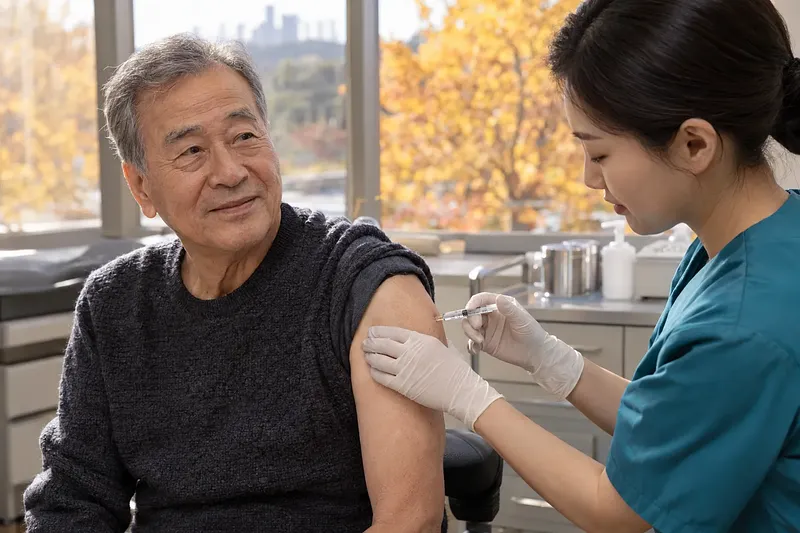
Vaccination for people aged 65 or older begins with the oldest age group to reduce congestion at the start of the program. Each age group may receive vaccination from its start date through the end of the program.
Age group | Date-of-birth criteria | Start date | End date
Aged 75 or older | Born on or before December 31, 1951 | October 12, 2026 | April 30, 2027
Aged 70-74 | Born January 1, 1952-December 31, 1956 | October 15, 2026 | April 30, 2027
Aged 65-69 | Born January 1, 1957-December 31, 1961 | October 19, 2026 | April 30, 2027
The exact date-of-birth criteria for people aged 65 or older and the start date for each age group should be checked in the official schedule on the Korea Disease Control and Prevention Agency’s Immunization Assistance website. By contrast, those born in 1962 or later are not eligible for the national program for people aged 65 or older unless they qualify under another category, such as children or pregnant women.
Why Eligibility Is Based on Date of Birth, Not School Grade
The free vaccination criteria for children are sometimes simply described as applying “through the second year of middle school,” but school grade is not the precise administrative standard. This is because birth year and school grade may not correspond in cases such as early school entry, deferred enrollment, or adolescents who do not attend school.
The following principles should be applied for the 2026-2027 season.
· Those born in 2012 are included in the eligible childhood group regardless of their current school grade.
· Those born in 2011 are not included in the eligible date-of-birth range for children, even if they are 14 years old on the vaccination date.
· Even infants born by August 31, 2026 may actually be vaccinated only after reaching 6 months of age.
· Adolescents who do not attend school receive the same support if they meet the national program criteria, including date of birth.
In other words, the date of birth on the resident registration record and the infant’s age in months should be checked before school grade.
Is Free Vaccination Available Outside the Area of Residence?
Those eligible for the national vaccination program may receive free vaccination at participating designated medical institutions and public health centers providing vaccination nationwide, regardless of the address on their resident registration record. However, not every hospital, clinic, or public health center participates in the national influenza vaccination program.
Before visiting, it is necessary to search for a designated medical institution through the Immunization Assistance website or call the institution to confirm the following:
· Whether the institution participates in the 2026-2027 seasonal national influenza vaccination program
· Whether it vaccinates the relevant eligible group among children, pregnant women, and people aged 65 or older
· Whether it has national program vaccine supplies in stock on the planned date of the visit
· Whether an appointment is required and whether vaccination is available only during designated hours
· What documentation is required to verify identity or pregnancy
Public health center operating procedures and eligible groups may vary by region. If planning to visit a public health center, first confirm with the relevant public health center whether it is providing vaccinations.
Why Vaccine Availability Should Be Confirmed Before Visiting
Even if an institution appears in a search as a designated medical institution, vaccine availability on a specific date is not always guaranteed. The rate of supply and use and the eligible groups vaccinated vary by institution, and supplies may be temporarily exhausted due to a surge of visitors at the beginning of the vaccination period.
In addition, the groups served may vary: for example, a medical institution may participate in childhood vaccination but not in programs for pregnant women or older adults. To avoid an unnecessary visit, do not check only whether the institution is designated; also confirm whether it vaccinates the relevant eligible group and whether vaccine is in stock that day.
A lack of vaccine stock does not mean that eligibility for free vaccination is lost. You may find another medical institution participating in the program or ask when supplies will be restocked.
Points to Check Before Vaccination
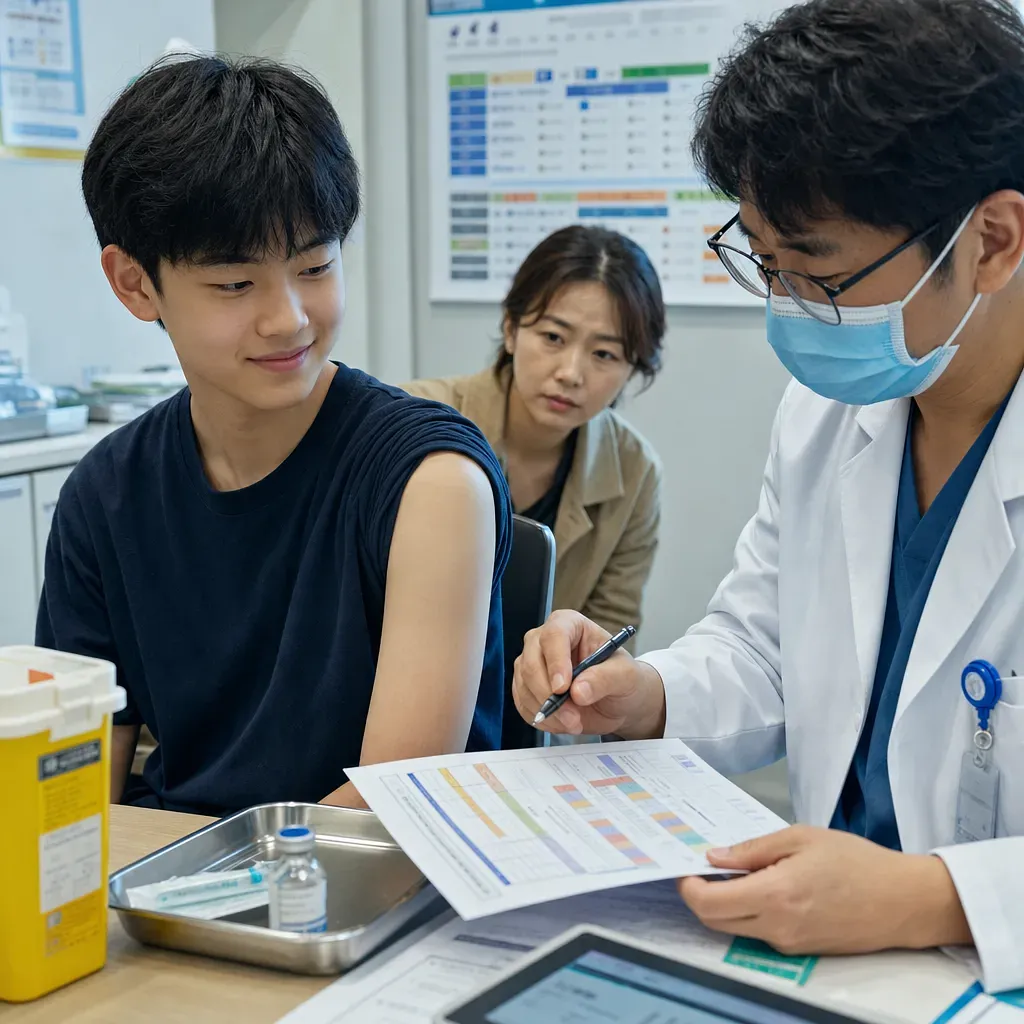
Even for those eligible for free vaccination, medical staff may adjust the vaccination date based on the person’s health on that day and any previous adverse reactions.
· If you have a fever or symptoms of an acute illness, consult the medical institution before visiting.
· If you previously had a serious allergic reaction after receiving an influenza vaccine, be sure to disclose this during the pre-vaccination screening.
· For children, review previous influenza vaccination records to determine whether 1 or 2 doses are required.
· Pregnant women should prepare pregnancy confirmation documentation accepted by the medical institution.
· Because the identification or documentation needed to confirm eligibility may vary by institution, ask in advance.
· After vaccination, remain at the medical institution for the period instructed and monitor for any acute adverse reactions.
People who are not eligible for free national vaccination may also receive paid vaccination at a medical institution, but the cost varies by institution. While a uniform nationwide vaccination period applies to the national program, the start date, vaccine type, and price for paid vaccination should be confirmed with each institution.
Points to Note When Checking the Schedule
The official program schedule may change depending on the status of infectious disease outbreaks, vaccine supplies, or administrative circumstances. Before actually visiting, the most accurate approach is to recheck the latest guidance from the Korea Disease Control and Prevention Agency’s Immunization Assistance website and the relevant medical institution.
In particular, rather than calculating a person’s current age based only on the expression “14 years old,” three criteria should be checked together: the date-of-birth range, whether the child has reached 6 months of age, and previous vaccination history.
 OnBinder