Skip to content
OnBinder
How-to 🇰🇷 South Korea

This content applies specifically to South Korea.

Flood-Damaged Car Insurance: Repair and Total Loss Claims

This process involves confirming your own-vehicle damage and single-vehicle accident coverage, documenting the flooding, and filing a claim with your insurer. It also explains coverage decisions based on whether the vehicle was parked or being driven, along with repairs, total loss, and deductible structures.

Listen or read this article

13:51

Listen, or read the text only.

Flood-Damaged Car Insurance: Repair and Total Loss Claims

Kokoro 82M AI-generated voice 14 min read

0:00 13:51

Advertisement

Download audio

File name
flood-damaged-car-insurance-claim-guide-en.mp3
Format
MP3 (audio/mpeg)
Duration
13:51
File size
9.52 MB
Engine
Kokoro 82M

This audio was generated by AI.

You may download and use it freely for personal use.

Flood-Damaged Car Insurance: Repair and Total Loss Claims

11 min read

Flood-Damaged Car Insurance: Repair and Total Loss Claims
This process involves confirming your own-vehicle damage and single-vehicle accident coverage, documenting the flooding, and filing a claim with your insurer. It also explains coverage decisions based on whether the vehicle was parked or being driven, along with repairs, total loss, and deductible structures.
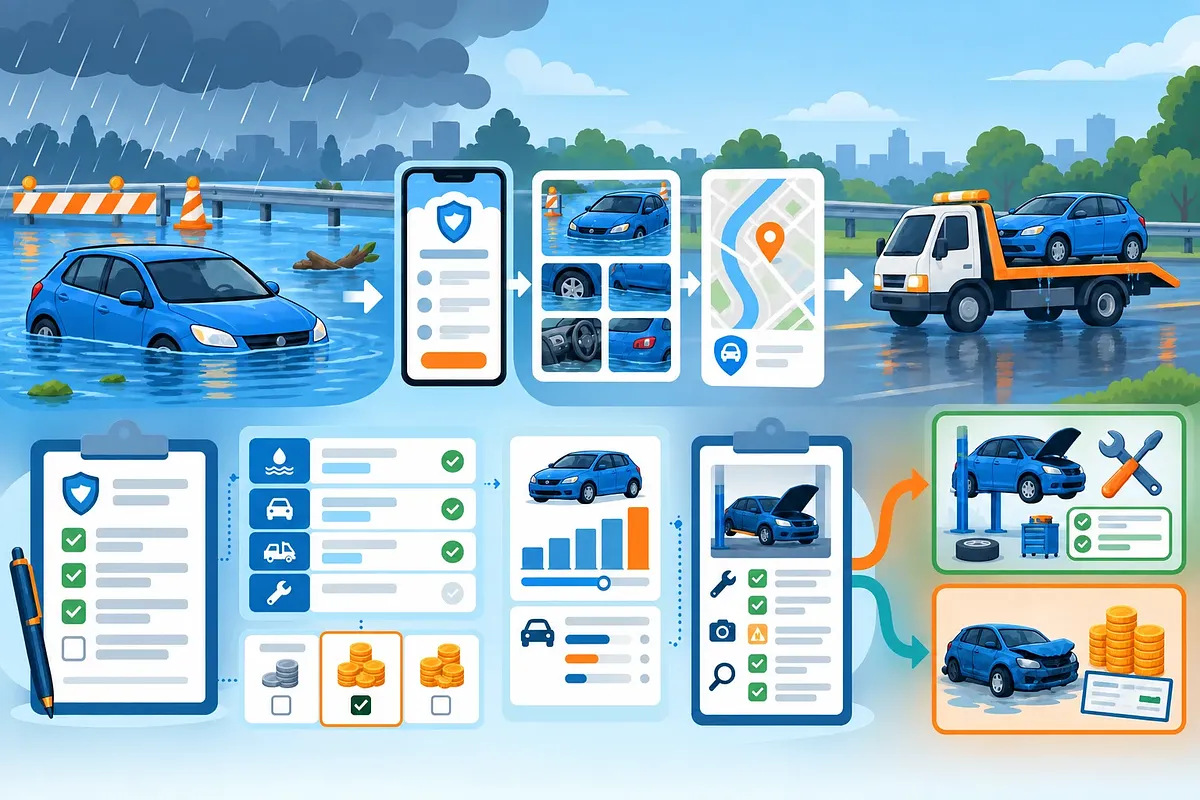
Get to safety and photograph the flooded condition without starting the engine.
Check your insurance policy to confirm whether you have own-vehicle damage and single-vehicle accident coverage.
Collect the location and time of the flooding, towing records, and vehicle inspection results.
Report the accident through your insurer's official app, website, or call center.
Review the repair or total-loss settlement based on the insurer's loss assessment.
If your own vehicle damage coverage and single-vehicle accident coverage are valid, you may file a claim for flood damage caused by a typhoon or flood. After ensuring your safety, gather photos, location information, and towing and repair records, and immediately report the claim to your insurer. Check the applicable laws and policy terms for the limitation period on insurance claims, and it is safer not to delay because an on-site investigation may be required.
Based on the published response (check the original for the publication date)
How to Report a Claim Immediately After Flooding
Immediately after flooding, prioritize personal safety over the vehicle. Even after the water has receded, do not attempt to start the vehicle. Doing so may worsen damage to the electrical system and engine.
· Move from the flooded area to a safe location. · Photograph the water level outside and inside the vehicle. · Record the flooding location and the time it was discovered. · Check your insurance policy for the coverage you purchased. · Have the vehicle towed using your insurer’s emergency roadside service. · Have the vehicle inspected by a repair shop designated by the insurer. · Review the loss assessment determining whether the vehicle should be repaired or treated as a total loss.
Report the accident through your insurer’s official channels. The call center number and reporting method are listed in the insurance policy. There is no single claims portal because each insurer has a different claims submission address.
Summary by Coverage Condition
Coverage is determined by considering both the coverage purchased and the cause of the flooding. Compensation is not automatic merely because the vehicle was submerged. The insurer will also investigate driver negligence and exclusions under the policy terms.
Situation | General Assessment | What to Check Flooding caused by a typhoon or flood while properly parked | Eligible for own vehicle damage coverage review | Whether own vehicle damage coverage and relevant riders were purchased Sudden flooding while driving normally | Eligible for own vehicle damage coverage review | Whether access was restricted at the time and the circumstances of driving Windows or sunroof left open | Coverage may be limited | Cause of rainwater intrusion and wording of the policy terms Voluntary entry into a restricted flood zone | Coverage may be limited or negligence may be assessed | Time of restriction and circumstances of entry Damage only to your own vehicle without own vehicle damage coverage | Difficult to obtain auto insurance compensation | Whether separate disaster assistance is available Damage to personal belongings inside the vehicle | Generally excluded from own vehicle damage coverage | Whether belongings are covered under separate insurance
The assessment may differ if there are circumstances indicating that the risk was intentionally increased. Coverage is not immediately excluded merely because a forecast had been issued. The insurer will review both on-site restrictions and the circumstances of driving.
How to Check Own Vehicle Damage Coverage
First, find the own vehicle damage section in your insurance policy. You must also check the special policy terms for single-vehicle accident coverage. The wording may vary depending on the insurance product and enrollment date.
· Open the contract in the insurer’s app or website. · Select the coverage or insurance policy menu. · Check whether own vehicle damage coverage is active. · Check riders related to single-vehicle accidents. · Save the vehicle value and deductible terms.
If the coverage is unclear, request a written response from the insurer. You must also confirm that the coverage was valid on the accident date. The renewal date or unpaid premiums may affect the assessment.
“If you have purchased the coverage, you may receive compensation for damage to the vehicle caused by flooding or similar events, and the insurance payment will be limited to the vehicle value stated in the insurance policy.” — Guidance on “Vehicle Flood Damage Caused by Torrential Rain”
Check the standard auto insurance policy terms for the exact official wording. You should also compare them with the individual policy terms of your insurer. Rider names and deductible terms may vary by contract.
Evidence Required for an Insurance Claim
Prepare materials showing the cause of the flooding and the extent of the damage. Not every document is necessarily required. Submit additional documents as instructed by the insurer.
· Photos showing the entire vehicle and license plate · Photos showing the interior waterline and points of water entry · Record of the flooding location and the time it was discovered · Dashcam footage or nearby video footage · Towing confirmation and towing fee receipt · Repair shop diagnostic report and repair estimate · Vehicle registration certificate and bank account for receiving the insurance payment · Materials confirming whether the area was restricted
Take photos only when it is safe to do so. Do not re-enter a flooded underground area. If there is a risk to human life, evacuation takes priority over taking photos.
Comparing Repair and Total Loss
A vehicle is not always treated as a partial loss merely because it can be repaired. The insurer considers both technical repairability and economic feasibility. The final approved amount is determined through the loss assessment.
Category | Repair Treatment | Total-Loss Treatment Basic assessment | Restoration to the pre-loss condition through repairs is possible | Repair is impossible or economically impractical Compensation standard | Calculated based on approved repair costs | Calculated up to the vehicle value stated in the insurance policy Deductible | Deduction terms under the contract apply | Check the applicable policy terms to determine whether it applies Vehicle handling | Continue driving after repairs | Discuss scrapping the vehicle or transferring the salvage Required materials | Estimate and repair records | Total-loss confirmation and deregistration or scrapping documents
Starting repairs at your own discretion may lead to a dispute over costs. You should also not scrap the vehicle before the insurer inspects the damage. First obtain written confirmation of the investigation and handling plan.
Structure for Calculating Compensation and the Deductible
Flood insurance payments are not based on the vehicle’s actual purchase price. The vehicle value stated in the insurance policy is the compensation limit. It may also differ from the listed sale price of a used vehicle.
· Estimated partial-loss payment = Repair costs approved by the insurer − Deductible under the policy terms · Estimated total-loss payment = Approved loss amount settled within the vehicle value limit · Additional equipment = Separately check whether it is included in the insured items · Towing and storage fees = Confirm necessity and the approved scope with the insurer
Deductible percentages and minimum and maximum limits vary by contract. Calculate the amount based on the own vehicle damage section of the insurance policy. The deduction method for a total loss must also be checked in the policy terms.
Premium Surcharges and Renewal Impact
Flooding caused by a natural disaster without driver negligence is generally not subject to a negligence-based premium surcharge. However, the assessment may differ if a violation of restrictions or an increase in damage is confirmed. Also ask the insurer how discounts will be applied upon renewal.
Reporting an accident and receiving an insurance payment are separate stages. A record of merely asking whether coverage is available does not confirm payment. Ask about the premium impact based on the final accident code and negligence assessment.
Acquisition Tax and Vehicle Handling After a Total Loss
If you purchase a replacement vehicle after a total loss, check whether local tax relief is available. Statutory requirements may apply to the acquisition of a replacement for a vehicle rendered unusable by a disaster. The tax department of the competent local government determines eligibility.
A total-loss confirmation from the insurer may be required. A vehicle scrapping acceptance certificate and proof of damage may also be requested. Before signing a contract for a new vehicle, check the required documents and applicable deadline.
You must also agree on the handling of the salvage before receiving the total-loss insurance payment. There may be terms under which rights to the salvage are transferred to the insurer. Avoid selling or dismantling it at your own discretion.
Common Mistakes
The biggest mistake is starting the vehicle immediately after the water recedes. This may lead to a dispute over whether the damage was worsened. Document the vehicle’s condition before it is towed.
· Checking only that own vehicle damage coverage was purchased without reviewing the relevant riders · Failing to record the flooding location and time · Proceeding with repairs or scrapping before the insurer’s confirmation · Assuming the full vehicle purchase price will be compensated · Assuming personal belongings inside the vehicle are covered by own vehicle damage coverage · Delaying the claim solely because of the limitation period · Relying only on verbal guidance without keeping a record of the handling terms
The limitation period for insurance claims under the Commercial Act must be checked in the latest provisions of the Commercial Act. The precise starting point may be disputed depending on the accident and the circumstances in which the claim arose. Immediately after the accident, leave a written record of your intent to file a claim or obtain a claim reference number.
Creating a Flood Accident Timeline
Creating a one-page timeline makes the loss investigation easier. Arrange your actions and evidence before and after the flooding in chronological order. You can also compare the times shown in different documents.
· Record the times of weather advisories and road restrictions. · Record when the vehicle was parked or driven. · Record when the flooding was discovered. · Link the capture times of photos and videos. · Add the times of the insurance claim report and towing. · Attach the repair shop admission time and diagnostic results.
This record is useful for explaining whether you entered a restricted area. It can also show circumstances indicating that the damage was not worsened. Do not edit the original files; store them separately.
Flood-Damaged Vehicle Insurance Coverage FAQ
Is Flooding While Parked Covered?
If a vehicle properly parked in an appropriate location was flooded by a typhoon or flood, it is eligible for coverage review. Own vehicle damage coverage and relevant riders must have been valid on the accident date. There must also be no intentional act or significant cause of increased damage.
Is Coverage Denied If the Vehicle Is Submerged While Driving?
Coverage is not always denied merely because the vehicle was flooded while being driven. The insurer will investigate whether the flooding was sudden or whether restrictions were disregarded. Submit the circumstances of driving and the road conditions at the time.
Is a Laptop Left Inside the Vehicle Also Covered?
Own vehicle damage coverage covers damage to the vehicle itself. Personal belongings such as laptops and bags are generally not covered. Check separate property insurance or personal belongings coverage.
Can I Move the Vehicle to a Repair Shop Before the Insurer Inspects It?
Towing the vehicle to a safe location may be necessary. However, disassembly or repairs should be performed only after the insurer’s inspection. Keep the towing confirmation and photos taken when the vehicle arrived at the repair shop.
What Happens If Repair Costs Exceed the Vehicle Value?
The vehicle may be deemed an economic total loss. The insurer compares the approved repair costs with the vehicle value. Obtain written confirmation of the total-loss determination and salvage handling terms.
Will My Premium Increase If I Receive a Flood Insurance Payment?
Flooding caused by a natural disaster without negligence is generally not subject to a negligence-based premium surcharge. The assessment may differ if negligence, such as violating restrictions, is confirmed. Before renewal, ask the insurer which accident code will apply.
0:00 0:00
1 / 63

Advertisement

Download text

File name
flood-damaged-car-insurance-claim-guide-en.txt
Format
TXT (text/plain)
Paragraphs
63

Downloads exactly what you see as a text file.

Please cite the source when quoting.

Large text

Makes the text larger and the colors clearer. Turn it on if the text feels too small.

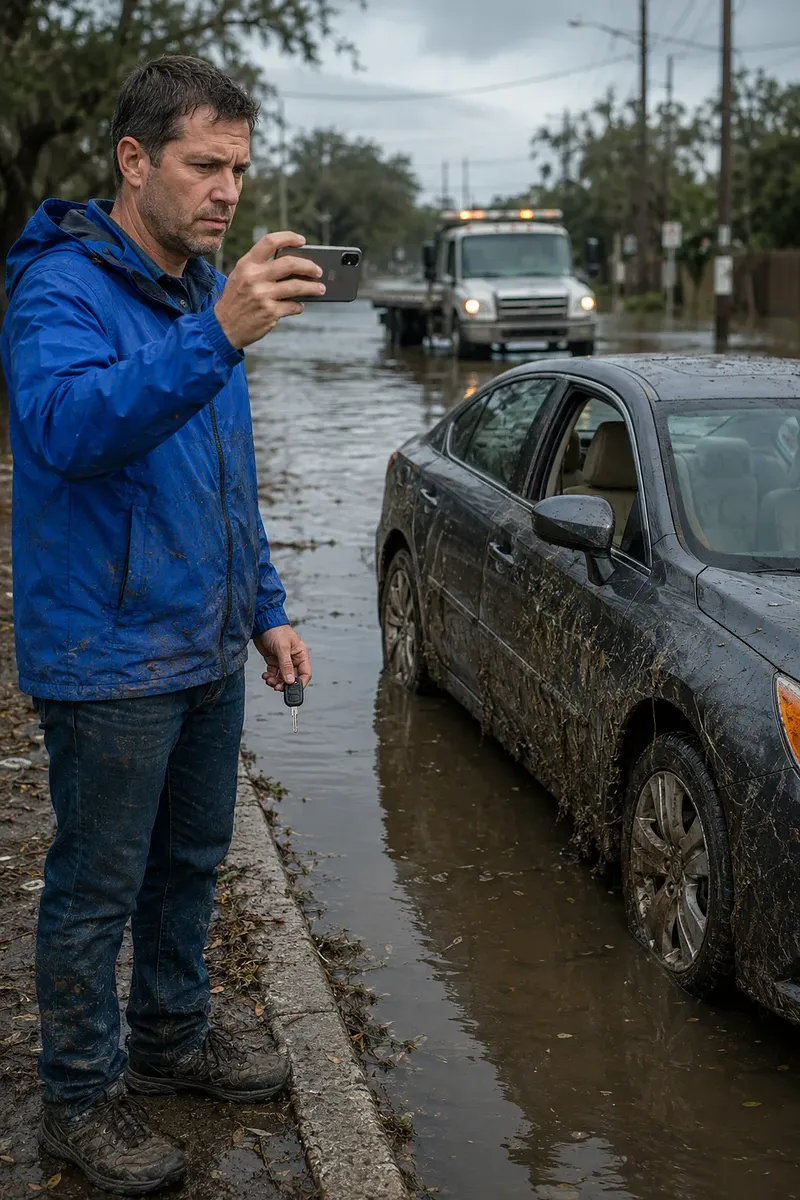
A man documents flood damage to a car for a possible insurance claim.

Key points

  • Get to safety and photograph the flooded condition without starting the engine.
  • Check your insurance policy to confirm whether you have own-vehicle damage and single-vehicle accident coverage.
  • Collect the location and time of the flooding, towing records, and vehicle inspection results.
  • Report the accident through your insurer's official app, website, or call center.
  • Review the repair or total-loss settlement based on the insurer's loss assessment.

If your own vehicle damage coverage and single-vehicle accident coverage are valid, you may file a claim for flood damage caused by a typhoon or flood. After ensuring your safety, gather photos, location information, and towing and repair records, and immediately report the claim to your insurer. Check the applicable laws and policy terms for the limitation period on insurance claims, and it is safer not to delay because an on-site investigation may be required.

Based on the published response (check the original for the publication date)

How to Report a Claim Immediately After Flooding

Immediately after flooding, prioritize personal safety over the vehicle. Even after the water has receded, do not attempt to start the vehicle. Doing so may worsen damage to the electrical system and engine.

  1. Move from the flooded area to a safe location.
  2. Photograph the water level outside and inside the vehicle.
  3. Record the flooding location and the time it was discovered.
  4. Check your insurance policy for the coverage you purchased.
  5. Have the vehicle towed using your insurer’s emergency roadside service.
  6. Have the vehicle inspected by a repair shop designated by the insurer.
  7. Review the loss assessment determining whether the vehicle should be repaired or treated as a total loss.

Report the accident through your insurer’s official channels. The call center number and reporting method are listed in the insurance policy. There is no single claims portal because each insurer has a different claims submission address.

Summary by Coverage Condition

Coverage is determined by considering both the coverage purchased and the cause of the flooding. Compensation is not automatic merely because the vehicle was submerged. The insurer will also investigate driver negligence and exclusions under the policy terms.

Situation General Assessment What to Check
Flooding caused by a typhoon or flood while properly parked Eligible for own vehicle damage coverage review Whether own vehicle damage coverage and relevant riders were purchased
Sudden flooding while driving normally Eligible for own vehicle damage coverage review Whether access was restricted at the time and the circumstances of driving
Windows or sunroof left open Coverage may be limited Cause of rainwater intrusion and wording of the policy terms
Voluntary entry into a restricted flood zone Coverage may be limited or negligence may be assessed Time of restriction and circumstances of entry
Damage only to your own vehicle without own vehicle damage coverage Difficult to obtain auto insurance compensation Whether separate disaster assistance is available
Damage to personal belongings inside the vehicle Generally excluded from own vehicle damage coverage Whether belongings are covered under separate insurance

The assessment may differ if there are circumstances indicating that the risk was intentionally increased. Coverage is not immediately excluded merely because a forecast had been issued. The insurer will review both on-site restrictions and the circumstances of driving.

How to Check Own Vehicle Damage Coverage

First, find the own vehicle damage section in your insurance policy. You must also check the special policy terms for single-vehicle accident coverage. The wording may vary depending on the insurance product and enrollment date.

  1. Open the contract in the insurer’s app or website.
  2. Select the coverage or insurance policy menu.
  3. Check whether own vehicle damage coverage is active.
  4. Check riders related to single-vehicle accidents.
  5. Save the vehicle value and deductible terms.

If the coverage is unclear, request a written response from the insurer. You must also confirm that the coverage was valid on the accident date. The renewal date or unpaid premiums may affect the assessment.

“If you have purchased the coverage, you may receive compensation for damage to the vehicle caused by flooding or similar events, and the insurance payment will be limited to the vehicle value stated in the insurance policy.”

— Guidance on “Vehicle Flood Damage Caused by Torrential Rain”

Check the standard auto insurance policy terms for the exact official wording. You should also compare them with the individual policy terms of your insurer. Rider names and deductible terms may vary by contract.

Evidence Required for an Insurance Claim

Prepare materials showing the cause of the flooding and the extent of the damage. Not every document is necessarily required. Submit additional documents as instructed by the insurer.

  • Photos showing the entire vehicle and license plate
  • Photos showing the interior waterline and points of water entry
  • Record of the flooding location and the time it was discovered
  • Dashcam footage or nearby video footage
  • Towing confirmation and towing fee receipt
  • Repair shop diagnostic report and repair estimate
  • Vehicle registration certificate and bank account for receiving the insurance payment
  • Materials confirming whether the area was restricted

Take photos only when it is safe to do so. Do not re-enter a flooded underground area. If there is a risk to human life, evacuation takes priority over taking photos.

Comparing Repair and Total Loss

A vehicle is not always treated as a partial loss merely because it can be repaired. The insurer considers both technical repairability and economic feasibility. The final approved amount is determined through the loss assessment.

Category Repair Treatment Total-Loss Treatment
Basic assessment Restoration to the pre-loss condition through repairs is possible Repair is impossible or economically impractical
Compensation standard Calculated based on approved repair costs Calculated up to the vehicle value stated in the insurance policy
Deductible Deduction terms under the contract apply Check the applicable policy terms to determine whether it applies
Vehicle handling Continue driving after repairs Discuss scrapping the vehicle or transferring the salvage
Required materials Estimate and repair records Total-loss confirmation and deregistration or scrapping documents

Starting repairs at your own discretion may lead to a dispute over costs. You should also not scrap the vehicle before the insurer inspects the damage. First obtain written confirmation of the investigation and handling plan.

Structure for Calculating Compensation and the Deductible

Flood insurance payments are not based on the vehicle’s actual purchase price. The vehicle value stated in the insurance policy is the compensation limit. It may also differ from the listed sale price of a used vehicle.

  • Estimated partial-loss payment = Repair costs approved by the insurer − Deductible under the policy terms
  • Estimated total-loss payment = Approved loss amount settled within the vehicle value limit
  • Additional equipment = Separately check whether it is included in the insured items
  • Towing and storage fees = Confirm necessity and the approved scope with the insurer

Deductible percentages and minimum and maximum limits vary by contract. Calculate the amount based on the own vehicle damage section of the insurance policy. The deduction method for a total loss must also be checked in the policy terms.

Premium Surcharges and Renewal Impact

Flooding caused by a natural disaster without driver negligence is generally not subject to a negligence-based premium surcharge. However, the assessment may differ if a violation of restrictions or an increase in damage is confirmed. Also ask the insurer how discounts will be applied upon renewal.

Reporting an accident and receiving an insurance payment are separate stages. A record of merely asking whether coverage is available does not confirm payment. Ask about the premium impact based on the final accident code and negligence assessment.

Acquisition Tax and Vehicle Handling After a Total Loss

If you purchase a replacement vehicle after a total loss, check whether local tax relief is available. Statutory requirements may apply to the acquisition of a replacement for a vehicle rendered unusable by a disaster. The tax department of the competent local government determines eligibility.

A total-loss confirmation from the insurer may be required. A vehicle scrapping acceptance certificate and proof of damage may also be requested. Before signing a contract for a new vehicle, check the required documents and applicable deadline.

You must also agree on the handling of the salvage before receiving the total-loss insurance payment. There may be terms under which rights to the salvage are transferred to the insurer. Avoid selling or dismantling it at your own discretion.

Common Mistakes

The biggest mistake is starting the vehicle immediately after the water recedes. This may lead to a dispute over whether the damage was worsened. Document the vehicle’s condition before it is towed.

  • Checking only that own vehicle damage coverage was purchased without reviewing the relevant riders
  • Failing to record the flooding location and time
  • Proceeding with repairs or scrapping before the insurer’s confirmation
  • Assuming the full vehicle purchase price will be compensated
  • Assuming personal belongings inside the vehicle are covered by own vehicle damage coverage
  • Delaying the claim solely because of the limitation period
  • Relying only on verbal guidance without keeping a record of the handling terms

The limitation period for insurance claims under the Commercial Act must be checked in the latest provisions of the Commercial Act. The precise starting point may be disputed depending on the accident and the circumstances in which the claim arose. Immediately after the accident, leave a written record of your intent to file a claim or obtain a claim reference number.

Creating a Flood Accident Timeline

Creating a one-page timeline makes the loss investigation easier. Arrange your actions and evidence before and after the flooding in chronological order. You can also compare the times shown in different documents.

  1. Record the times of weather advisories and road restrictions.
  2. Record when the vehicle was parked or driven.
  3. Record when the flooding was discovered.
  4. Link the capture times of photos and videos.
  5. Add the times of the insurance claim report and towing.
  6. Attach the repair shop admission time and diagnostic results.

This record is useful for explaining whether you entered a restricted area. It can also show circumstances indicating that the damage was not worsened. Do not edit the original files; store them separately.

Flood-Damaged Vehicle Insurance Coverage FAQ

Is Flooding While Parked Covered?

If a vehicle properly parked in an appropriate location was flooded by a typhoon or flood, it is eligible for coverage review. Own vehicle damage coverage and relevant riders must have been valid on the accident date. There must also be no intentional act or significant cause of increased damage.

Is Coverage Denied If the Vehicle Is Submerged While Driving?

Coverage is not always denied merely because the vehicle was flooded while being driven. The insurer will investigate whether the flooding was sudden or whether restrictions were disregarded. Submit the circumstances of driving and the road conditions at the time.

Is a Laptop Left Inside the Vehicle Also Covered?

Own vehicle damage coverage covers damage to the vehicle itself. Personal belongings such as laptops and bags are generally not covered. Check separate property insurance or personal belongings coverage.

Can I Move the Vehicle to a Repair Shop Before the Insurer Inspects It?

Towing the vehicle to a safe location may be necessary. However, disassembly or repairs should be performed only after the insurer’s inspection. Keep the towing confirmation and photos taken when the vehicle arrived at the repair shop.

What Happens If Repair Costs Exceed the Vehicle Value?

The vehicle may be deemed an economic total loss. The insurer compares the approved repair costs with the vehicle value. Obtain written confirmation of the total-loss determination and salvage handling terms.

Will My Premium Increase If I Receive a Flood Insurance Payment?

Flooding caused by a natural disaster without negligence is generally not subject to a negligence-based premium surcharge. The assessment may differ if negligence, such as violating restrictions, is confirmed. Before renewal, ask the insurer which accident code will apply.

Sign-in required

Sign in with your Google account to like, comment, and save highlights.

Images

A man documents flood damage to a car for a possible insurance claim.
The steps for filing a flooded-car claim and receiving repair service or a total-loss payout are shown.

FAQ

If I only have own vehicle damage coverage, will all flood damage be covered?

Some policies require coverage for single-vehicle accidents in addition to own vehicle damage coverage. You must check both the endorsements on the insurance policy and whether they were in effect on the date of the accident.

Can a vehicle flooded by a typhoon while parked be covered by insurance?

If the vehicle was flooded by a typhoon or flood while properly parked, it may be eligible for coverage. The primary criterion is whether you have own vehicle damage coverage and the relevant endorsements.

Is damage covered if rainwater enters through a window left open?

Coverage may be limited if rainwater entered through an open window or sunroof. The insurer will investigate whether the vehicle was flooded from the outside or whether rainwater simply entered the vehicle.

Is the insurance payout for a flooded vehicle calculated based on its purchase price?

The coverage limit is the vehicle value stated in the insurance policy, not the purchase price. A partial loss is calculated based on the approved repair costs and the deductible specified in the policy.

When is a flooded vehicle declared a total loss?

A total loss may be considered if repairs are impossible or the approved repair costs are excessively high relative to the vehicle value. The final determination is subject to the insurer's loss assessment and the policy terms.

What is the deadline for filing an insurance claim for flood damage?

The statute of limitations for insurance claims under the Commercial Act should be verified in the latest provisions of the Act. To avoid disputes over when the limitation period begins and to preserve evidence from the scene, it is safer to report the accident immediately.

Will my auto insurance premium increase if I receive an insurance payout for flood damage?

Flood damage caused by a natural disaster without driver fault is generally not subject to a fault-based premium surcharge. The determination may differ if it is found that the driver entered a restricted area or aggravated the damage.

Can I scrap a flooded vehicle before it is confirmed as a total loss?

It is safer not to scrap the vehicle at your own discretion before the insurer inspects it and determines that it is a total loss. You should first reach an agreement with the insurer regarding rights to the salvage and the scrapping procedure.

Sources

Also available as video and a short read

Videos and a short write-up made from this content. Watch instead of reading, or skim the gist first.

Short version

Loading…

Data formats

This content is available in several machine-friendly formats.

Data-only languages (machine translated, files only)

Indonesian JSON MD Portuguese JSON MD Chinese (Traditional) JSON MD Deutsch JSON MD

Verification

This article was drafted with AI and then reviewed and edited by a person.

Reviewed by 신익희 · 편집장 · 2026-09-05

Figures in this article were checked against the source material during generation. 4 correction(s) applied. · 2026-09-05

This translation has been cross-checked by AI. · 2026-09-05

Reuse & AI usage

Search indexing and AI citation with attribution are welcome. See the license policy for details.

CC BY · License

Loading…

Loading…

Related content

From Injoys

Request the content you want and take 70% of what it earns

Just leave the subject. We handle production, review, translation and distribution.

See how revenue sharing works

Comments