경제
9 min read
January 11, 2026 11:49
U.S. Consumption Trends The middle class's choice to abandon McDonald's in the face of inflation
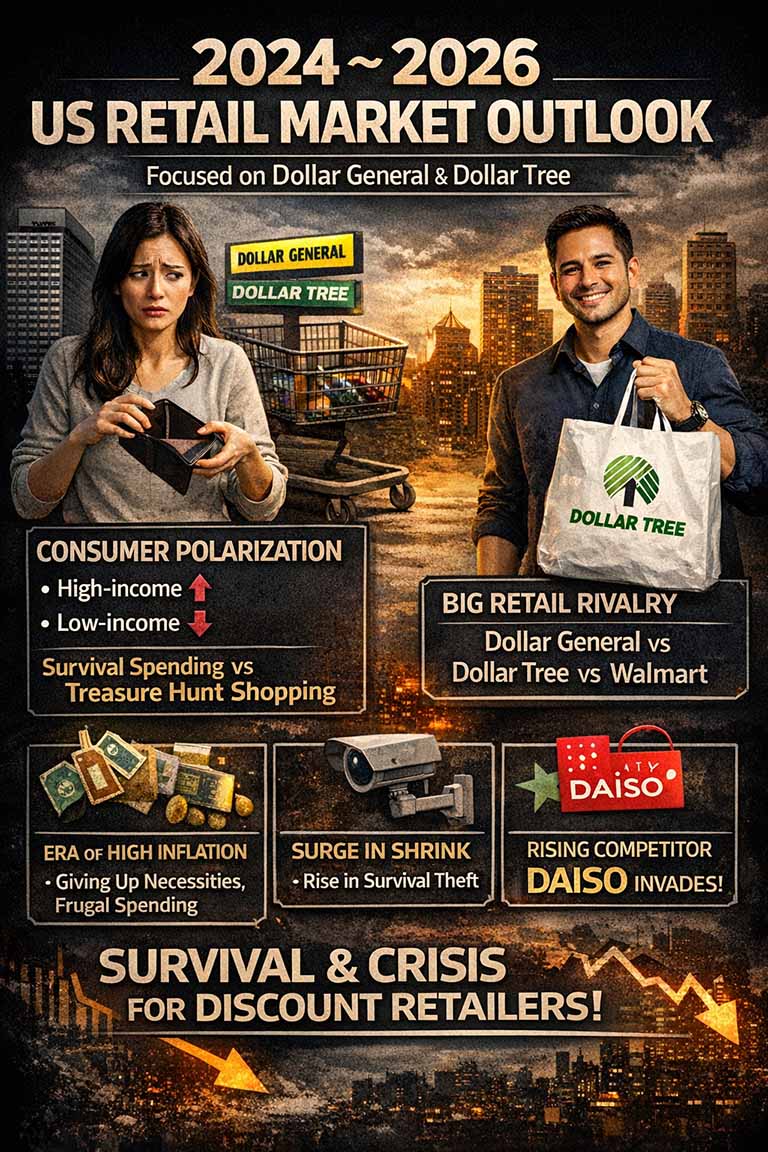
Structural causes of U.S. consumption polarization and strategies for different income groups to respond The U.S. economy is in the midst of a dramatic transition, and at the center of it is the disruptive phenomenon of consumer polarization. In the past, the U.S. retail market has maintained a stable structure with clear distinctions between the stores patronized by different income levels: low-income consumers patronized dollar stores like Dollar General and Dollar Tree, where low prices were a priority; middle-income consumers favored big-box stores like Wal-Mart and Kroger; and high-income consumers sought out Whole Foods Market and premium retailers. However, 2...
#트럼프 관세 정책
#미국 소비 양극화
#미국 중산층 소비 변화
221
0
0
36.0
Read