Social & Videos
Short social takes on our content and our shorts, long-form and product videos, all in one stream with the newest first. Swipe through one at a time and follow through to the full article when you want more.


Foreign investors’ net selling of around 7 trillion won on the KOSPI has raised questions about whether Korean semiconductor stocks are flashing a warning sign. The picture is more nuanced. This article separates market flow from fundamentals by looking at Samsung Electronics’ official earnings guidance, SK Hynix’s exceptionally high first-quarter operating margin, memory price trends, AI server and HBM demand, and the distinction between official figures and securities-firm consensus estimates. For investors, the key issue is not simply who is buying or selling today. It is whether AI-driven memory demand can continue supporting margins while the semiconductor cycle evolves rather than disappears. Read more : https://injoys.com/en/articles/samsung-sk-hynix-ai-memory-stock-fact-check #Semiconductors #Investment

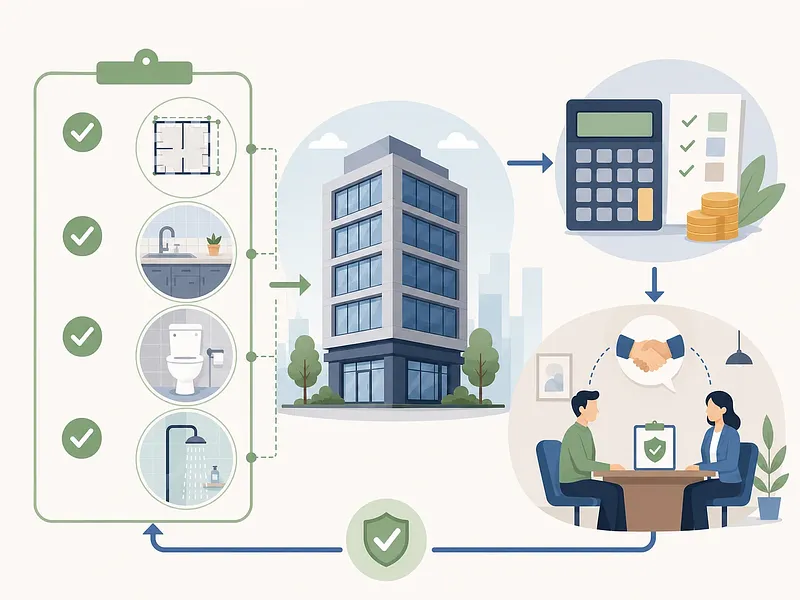
Why Office-Apartment Brokerage Commissions Are Higher Than Those for Residential Properties, and How They Are Calculated
Officetel fees can reach 0.9%. For brokerage purposes, units that do not meet the residential-use requirements are treated as non-residential property. Their commission may be negotiated up to 0.9% of the transaction amount. This distinction is easy to misjudge because actual residential occupancy does not determine the fee schedule. Officetels are classified as commercial facilities under the Building Act, so the standard schedule for residential properties generally does not apply. A separate framework covers units with a usable floor area of 85㎡ or less that include a private kitchen, private flush toilet, and bathing facilities. For qualifying units, the maximum rate is 0.5% for sales and exchanges and 0.4% for leases and other transactions. The article lays out these conditions so the applicable ceiling can be identified before contract costs are agreed. Crucially, 0.4% is a statutory maximum rather than a fixed charge. Prospective tenants, purchasers, and professionals reviewing officetel contracts should read the article before negotiating and confirming the commission. #Officetel #RealEstateContracts


57,000 jobs temper the June outlook. The unemployment rate fell to 4.2%, but lower participation or a contraction in labor supply can also pull that rate down. The headline alone does not establish broad labor-market strength. This tension matters for interest-rate analysis. Slower payroll growth may support easing, while wage growth and inflation trends can point in another direction when the Federal Reserve weighs its next move. The article places nonfarm payrolls, unemployment, hourly wages, labor-force participation, prior-month revisions, and industry distribution in one analytical frame. It explains how 3- and 6-month averages help distinguish a monthly fluctuation from a broader trend. It also recommends comparing the four core indicators across the past 12 months on the same axis, making changes in momentum easier to evaluate. Professionals tracking the U.S. economy, rates, or workforce conditions can read the full analysis for the complete framework.


A home-rich retiree reviews cash flow. With 75.8% of the average South Korean household’s assets held in real assets, property value alone may not provide the liquidity retirement requires. Hong Kong illustrates why the distinction matters. Ultra-high-end transactions coexist with approximately 220,000 residents living in subdivided housing, showing that asset prices and housing stability can move in different directions. The article does not predict a housing crash. It uses the Hong Kong case to examine the vulnerability of relying on a single asset for an entire retirement. It lays out a practical review of housing stability, liquid assets, pensions, insurance, and the possible use of a reverse mortgage. Local demand, access to medical care, resale potential, and lending conditions can change a home’s risk profile. South Koreans in their 50s and 60s who are planning retirement should read the analysis before treating home equity as a complete retirement plan. #RetirementPlanning #RealEstateRisk


Strait of Hormuz risk enters forecasts. Falling crude prices do not immediately mean lower inflation. Expectations of resumed shipping can reduce the oil-market risk premium, while ship safety, marine insurance, and logistics costs may take longer to normalize. The article explains how an energy shock moves through tanker traffic, spot LNG prices, exchange rates, supply chains, and central bank inflation forecasts. This broader view helps distinguish a change in market expectations from a sustained reduction in household and business costs. For energy-importing countries, higher oil and LNG prices can pass through to electricity, transportation, and food. Emerging economies may face an additional burden when a strong dollar and weaker local currencies raise import costs. Investors and policymakers assessing inflation or energy security should read the full analysis rather than monitor crude prices alone.

Reading the First FOMC Minutes Under Chair Wash: Why the U.S. Interest Rate Path Has Become Uncertain Again
The June 16–17 FOMC minutes, released on July 8, suggest that the U.S. interest rate outlook has become more uncertain again under Chair Wash. Committee members appear to differ on how inflation risks should be interpreted, leaving multiple paths open: keeping rates unchanged, raising rates further, or eventually cutting rates. This matters beyond monetary policy. Energy prices, tariffs, and the AI investment boom may all affect inflation through different channels, while upcoming CPI, PCE, and employment data will be important inputs before the July 28–29 meeting. The article also clarifies why the Fed’s dot plot should be read as a conditional outlook, not a commitment. https://injoys.com/en/articles/warsh-first-fomc-minutes-us-rate-path-uncertainty #FOMC #Inflation #InterestRates