Japan Fire Prevention Campaign 2026 Dates and Alarm Checks
Japan's 2026 autumn National Fire Prevention Campaign runs from November 9 to 15. Home fire alarms should be tested at least twice a year, with replacement of the units recommended about 10 years after installation.
- Japan's 2026 autumn National Fire Prevention Campaign runs from November 9 to 15.
- This year's priorities are preventing residential fires, earthquake-related fires, and forest fires.
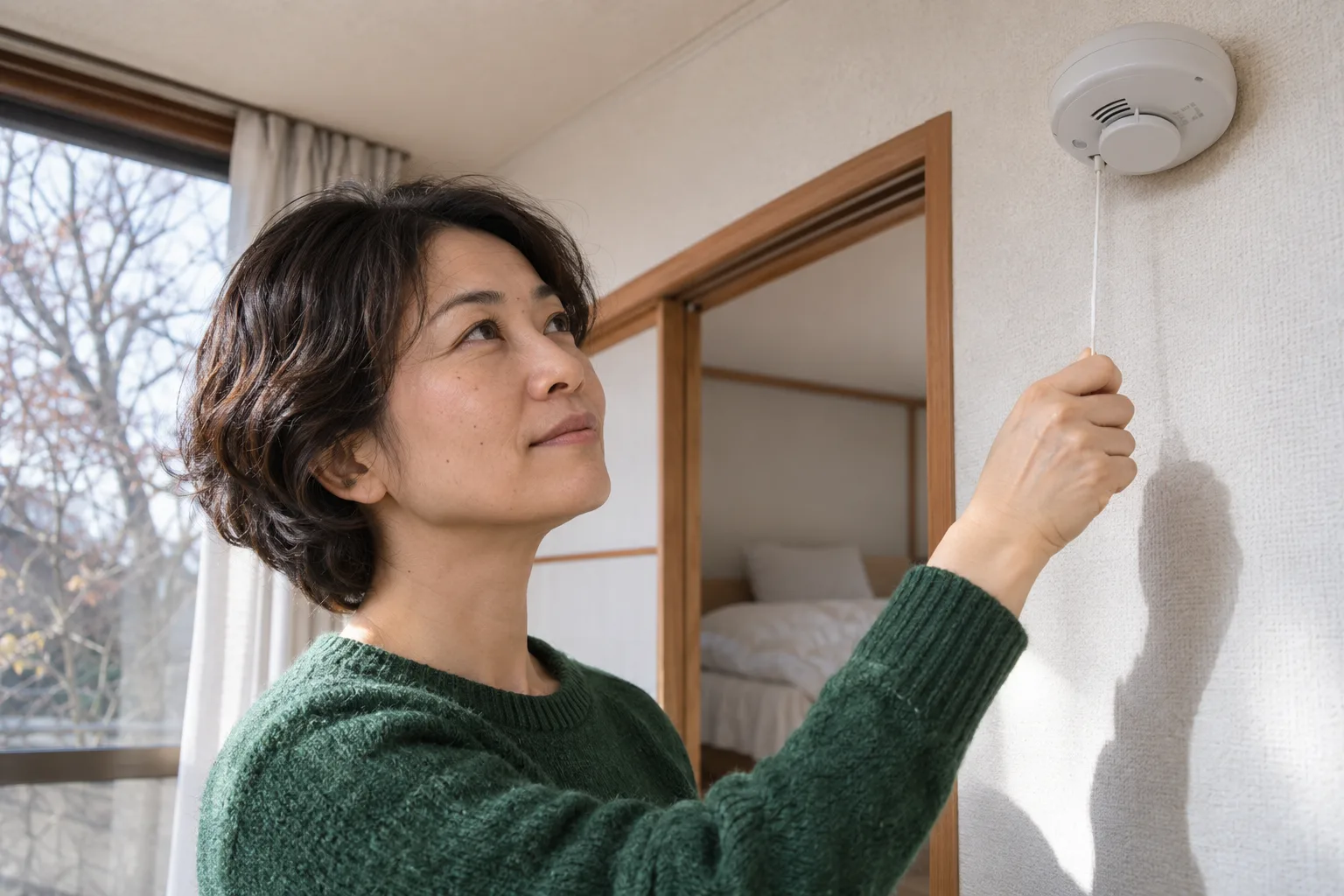
- Test home fire alarms at least twice a year using the test button or pull cord.
- Replacing the entire alarm unit is recommended about 10 years after installation.
- Check separately that the alarm works and that it is installed in the location required by ordinance.
Japan's 2026 National Autumn Fire Prevention Campaign runs from November 9 to 15. Home fire alarms should be tested at least twice a year. The guideline is to replace the unit about 10 years after installation.
The schedule follows the guidelines dated September 7, 2026, and testing follows the notice dated February 5.
Japan's 2026 Fire Prevention Campaign Schedule
This year's campaign runs for 7 days in Japan, from Monday, November 9, to Sunday, November 15. Japan's Fire and Disaster Management Agency (消防庁) announced the campaign in its November 6 press release list. As of November 9, the campaign has started. Fire and Disaster Management Agency press release list
The nationwide fire prevention slogan encourages people to make checking for fire a good habit. Below is the original wording from the agency's "2026 National Autumn Fire Prevention Campaign Implementation Guidelines."
火の確認 いい日を支える いい習慣
It means "Checking for fire: a good habit that supports a good day." The campaign promotes prevention activities to reduce fires and casualties. This year's priorities are home fire prevention, earthquake-related fire prevention, and forest fire prevention. 2026 implementation guidelines
Differences Between Home, Earthquake-Related, and Forest Fire Measures
These three sets of measures address different circumstances in which fires start and different risks.
| Category | Risk to reduce | Main measures |
|---|---|---|
| Home fire prevention | Ignition during daily activities and delayed fire detection | Safe use of fire, alarm testing, evacuation preparation |
| Earthquake-related fires | Ignition from electrical equipment and other items damaged by shaking | Cutting off electricity with earthquake-sensitive circuit breakers |
| Forest fires | Spread of fires that start outdoors | Stopping the use of fire in dry or windy conditions, extinguishing remaining embers |
Earthquake-related fires do not occur only immediately after an earthquake. They can also occur when power is restored after an outage. An earthquake-sensitive circuit breaker cuts off electricity when it detects shaking at or above a set level. Installing a distribution panel type requires electrical work. Agency guidance on earthquake-sensitive circuit breakers
To prevent forest fires, do not use fire outdoors on dry or windy days. This is a precaution in the agency's "Preparing for Forest Fires" guidance. Outdoor use of fire is prohibited in areas under a forest fire warning. Check with the local fire department for the specific scope of restrictions. Agency guidance on preparing for forest fires
Home Fire Alarm Installation Requirements
Japan requires fire alarms in all homes. However, some homes are exempt because they have automatic fire detection systems or other qualifying equipment. To determine whether a home meets the requirements, check both local ordinances and the building's equipment. Agency materials on promoting home fire alarm installation
The basic installation locations are bedrooms and the top of the stairs on floors with bedrooms. The agency's guidance excludes first-floor stairs from this basic requirement. Additional locations may be required depending on the number of floors and the layout. Requirements for kitchens and other rooms vary by local ordinance. Agency home fire alarm Q&A
How to Test Fire Alarms
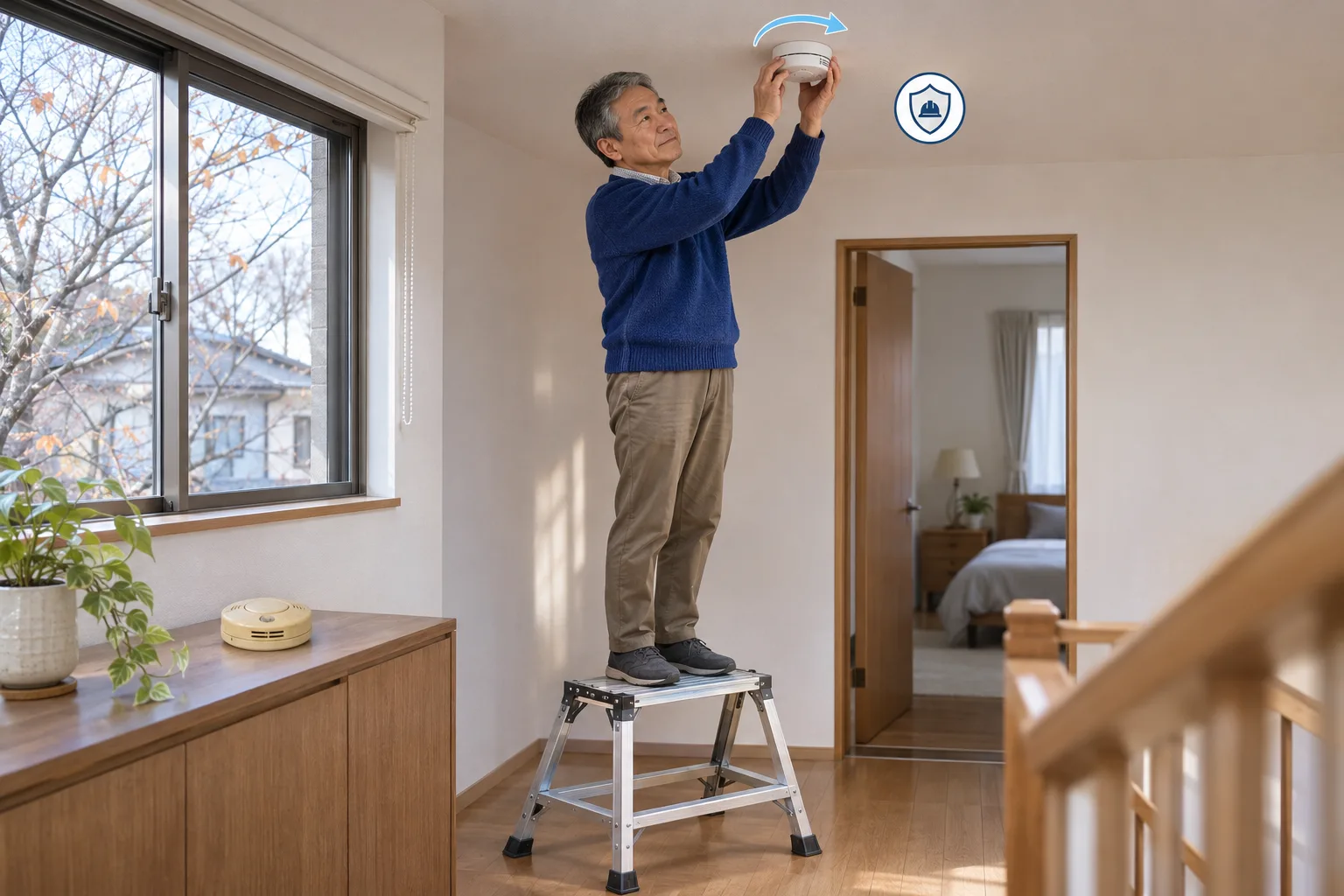
Test the alarm by pressing its button or pulling its test cord. The guidance attached to the agency's February 2026 notice recommends testing at least twice a year. Check the product manual for the specific sound that indicates normal operation.
- Check the product manual to find the test button or cord.
- Use a stable platform when working at a height. The agency's guidance warns of the risk of falls and falling objects.
- Press the button or pull the cord to check the response.
- Check the installation month and year or the marked replacement date. If there is no installation record, use the year of manufacture to estimate the timing.
Action is needed if the alarm does not respond or gives an alert other than a fire warning. The attached guidance advises replacing the unit if it has malfunctioned or its battery is depleted. If you cannot identify its status from the sound alone, check the manual. Agency installation survey notice and testing guidance
Deciding When to Replace an Alarm Based on Its Condition and Age
The guideline is to replace an alarm unit about 10 years after installation. The reasons are battery depletion and aging internal electronic components. Base the replacement decision on both the test results and the length of time in use. Agency materials on promoting installation
| Observed condition | Assessment and action |
|---|---|
| Normal response, less than 10 years since installation | Continue regular testing |
| Normal response, about 10 years since installation | Replacement of the unit is recommended |
| No response, or a malfunction or depleted-battery alert | Replace the unit according to the guidance attached to the notice |
| Installation date unknown | Check installation records, the replacement date, and the year of manufacture |
The 10-year guideline does not guarantee that the alarm will remain fault-free until then. Replacing the battery does not reverse the aging of components inside the unit. The agency recommends replacing the unit once 10 years have passed since installation. Agency materials on the need for testing and replacement
Fire Prevention Items to Check at Home
Home fire prevention involves measures ranging from preventing ignition to preparing for evacuation. The agency summarizes these in "Home Fire Prevention: 10 Points to Protect Lives." Check the following items along with testing your alarms. Agency home fire prevention guidance
- Do not smoke in bed.
- Do not place flammable items near heaters.
- Do not leave cooking flames unattended.
- Clean dust from electrical outlets and unplug items that are not needed.
- Use heaters and cooking appliances with safety features.
- Keep rooms tidy and use flame-resistant bedding, clothing, and curtains.
- Keep a fire extinguisher and check how to use it.
- Ensure that older adults and people with limited mobility have evacuation routes and methods.
- Participate in local fire prevention and disaster preparedness drills to learn how to respond.
Alarm Notification Methods and Evacuation Preparation
When replacing alarms, you can also consider where warnings need to be heard or received. A standalone alarm sounds at the unit that detects the fire. An interconnected alarm also sends a signal to other units configured to connect with it. The agency also provides information on supplementary alarm devices for people with visual or hearing impairments. Agency home fire prevention guidance
| Type | Notification features | What to check |
|---|---|---|
| Standalone | Sounds at the unit that detects the fire | How the installation location relates to living spaces |
| Interconnected | Connected units sound together | Whether the units are actually configured to connect |
| Supplementary alarm device | Supplements notifications with sound or light | Suitability for residents' sensory needs |
Connecting these distinctions with evacuation guidance broadens the scope of your checks. In addition to checking that devices work, consider how residents will perceive the alerts. If someone needs help moving, a separate evacuation plan is also needed. This is a practical summary that connects the alarm device guidance with the agency's evacuation guidance.
Frequently Asked Questions
Is replacement after 10 years a new rule introduced in 2026?
This replacement guideline was not newly introduced in 2026. The same recommendation appears in the agency's existing testing and replacement materials. This year's notice again emphasizes replacing units once 10 years have passed since installation.
Does having one alarm meet the installation requirements?
Having one unit is not enough to determine compliance. All installation locations required by local ordinance must be covered. Check with the local fire department or fire station for the requirements that apply to your home's layout.
Can testing stop once the campaign ends?
Alarm maintenance remains necessary after the campaign ends. November 15 in Japan is the final day of this year's campaign. It is not the end date for alarm testing or fire prevention practices.
Where can I check for installation or replacement assistance?
Check with your local municipality and fire department to find out whether assistance is available. The national campaign schedule alone does not determine individual eligibility or assistance amounts. Check local announcements for the assistance offered and application requirements.
FAQ
When is Japan's 2026 National Autumn Fire Prevention Campaign?
It runs for 7 days, from Monday, November 9, to Sunday, November 15, 2026. This is specified in the Fire and Disaster Management Agency's September 7 implementation guidelines.
What are the priorities of the 2026 Fire Prevention Campaign?
The priorities are preventing fires in homes, earthquake-related fires, and forest fires. These address fires starting in everyday life and delayed detection, electrical fires caused by earthquakes, and the spread of outdoor fires, respectively.
How often should home fire alarms be tested?
The guidance attached to the Fire and Disaster Management Agency's 2026 notice recommends testing at least 2 times a year. Check operation using the button or test cord. When working at a height, secure stable footing to guard against falls and falling objects.
What should you do if the alarm makes no sound when tested?
The Fire and Disaster Management Agency's accompanying guidance explains that no response indicates a malfunction or a depleted battery. The guidance recommends replacing the unit in this case. Check the manual for the meaning of each device's alerts.
Does an alarm need to be replaced after 10 years even if it still sounds as it should?
The Fire and Disaster Management Agency recommends replacing the unit about 10 years after installation. Possible deterioration of internal electronic components is another reason for replacement. A normal operating sound alone does not mean you can ignore how long the alarm has been in use.
Can you keep using the alarm if you only replace the battery?
Even after replacing the battery, deterioration of components inside the unit may remain. Replacing the unit is recommended for devices installed about 10 years ago. Follow the manual for instructions on handling each device.
Is it enough to install a fire alarm only in the kitchen?
Standard installation locations include bedrooms and the top of the stairs on the same floor. Installing an alarm only in the kitchen does not mean the requirements are met. Specific locations must be checked against local ordinances and the layout of the home.
Is an earthquake-sensing circuit breaker the same device as a fire alarm?
They serve different purposes. A fire alarm detects a fire and gives an alert. An earthquake-sensing circuit breaker cuts off electricity when it detects shaking at or above a certain level.
What devices can be considered if someone has difficulty hearing?
The Fire and Disaster Management Agency provides information on auxiliary alarm devices that emit sound or light. There are also interconnected models that send fire signals to other devices. Evacuation preparations tailored to the residents' needs are also necessary.
What is the difference between a forest fire advisory and a forest fire warning?
During an advisory, you must make an effort to refrain from using fire outdoors. During a warning, using fire outdoors is prohibited in the area covered by the warning. Check local ordinances and guidance from the local fire department for detailed restrictions.
Sources
- List of press releases from Japan's Fire and Disaster Management Agency, November 6, 2026 notice on conducting the National Autumn Fire Prevention Campaign
- Japan's Fire and Disaster Management Agency, notice and implementation guidelines for the 2026 National Autumn Fire Prevention Campaign
- Japan's Fire and Disaster Management Agency, notice of the 2026 survey on residential fire alarm installation status and guidance on inspection and replacement
- Japan's Fire and Disaster Management Agency, residential fire alarm Q&A and home fire prevention rules
- Japan's Fire and Disaster Management Agency, materials promoting the adoption of residential fire alarms, March 2026
- Japan's Fire and Disaster Management Agency, the need to inspect and replace residential fire alarms and measures to encourage this
- Japan's Fire and Disaster Management Agency, information on earthquake-related fires and seismic circuit breakers
- Japan's Fire and Disaster Management Agency, forest fire preparedness and information on advisories and warnings
- Japan's Fire and Disaster Management Agency, information on home fire prevention and interconnected and auxiliary alarm devices
Images